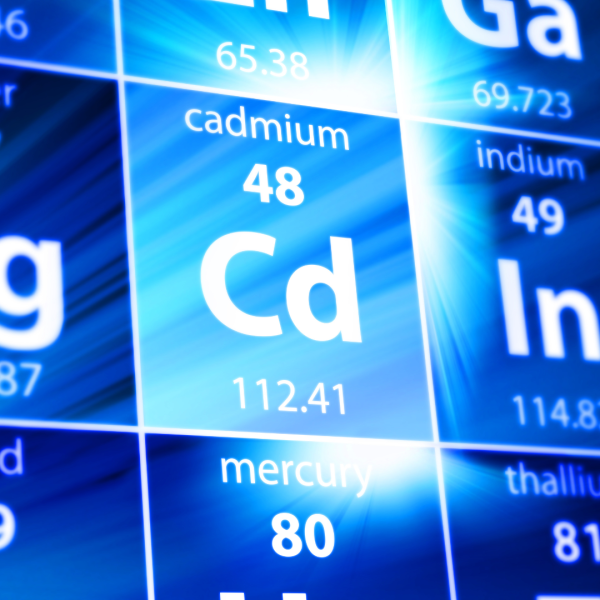
Cadmium in tap water: what are the health risks and how can you protect yourself effectively?
Since the beginning of June 2025, a new health alert has been causing a stir: private doctors and environmental health experts have been sounding the alarm about the growing contamination of the French with cadmium, especially children and women. This crisis poses an urgent question: what can we do concretely to limit our exposure to this carcinogenic heavy metal?
What is cadmium and why is it dangerous to health?
Cadmium is a toxic heavy metal, known for its carcinogenic, mutagenic and reproductive toxic effects. When it builds up in the body, which can happen via food or drinking water, it can lead to:
- Kidney damage
- Increased bone fragility (demineralization, fractures)
- Fertility disorders
- Negative effects on the development of the fetus
What worries the health authorities is that this pollutant persists in the body for years, and that the levels measured in children in France have doubled in less than 10 years.
How is the population exposed to cadmium?
According to the URPS (Regional Unions of Health Professionals), this contamination comes largely from conventional agriculture, via cadmium-rich phosphate fertilizers, which are used massively on crops.
The problem? Cadmium is then found in our daily diet.
The main foods concerned are:







Why are children and women the most affected?
Children have "astronomical" contamination rates, according to cardiologist Pierre Souvet (ASEF), because their bodies are more fragile and they consume more contaminated food in proportion to their weight.
Women, on the other hand, are more exposed than men due to iron deficiencies that promote the absorption of cadmium in the body.
What can you do to protect yourself from cadmium on a daily basis?
Doctors recommend favouring organic food, which is less exposed to chemical fertilisers. But that's not all: drinking water can also contain cadmium, especially in the event of soil or supply network pollution.
A reliable solution for removing heavy metals such as cadmium: Coldstream FTO+ filters, integrated into Pure Filterssystems.
These filters have demonstrated a reduction of up to 94.87% of cadmium based on tests carried out at 3,000 litres under normal operating conditions.
Even under extreme test conditions simulating filter end-of-life and filter media saturation ( Envirotek report), the reduction remains at 41.3%, demonstrating residual filtration capacity despite the maximum load.
This difference is explained by: Different test methodologies, one simulates normal home use, the other aims to test the limits of the filter. The nature of heavy metals, whose adsorption varies greatly depending on water conditions.
It is recommended to replace the filters every 6 to 8 months or after 1,500 liters per pair, to maintain optimal and consistent filtration.
Sources :
URPS & ASEF – National Conference of June 2025.
Data sheets and test results Pure Filters (Coldstream FTO+).