Dioxane, a carcinogen hidden in your tap water
In July 2023, ANSES revealed the worrying presence of 1,4-dioxane, a potentially carcinogenic solvent, in tap water in several municipalities in the Île-de-France region. Although contamination rates are at record levels, no corrective measures have yet been put in place. Residents, left in limbo, have no way of knowing if their water is affected by this pollution.
Sources: Le Parisien, L'Anses, Femme Actuelle.
What is 1,4-dioxane and why is it of concern?
1,4-Dioxane, also known as Dioxane, is a chemical compound used primarily as a stabilizer in chlorinated solvents and as a solvent in various industrial and cosmetic products.
Since the 1950s and 1960s, its use has increased considerably in sectors such as the production of paints, varnishes, dyes, and antifreeze, as well as in everyday consumer products such as detergents, deodorants, shampoos, textiles, and stationery.
1,4-Dioxane is classified as Group 2B by the International Agency for Research on Cancer (IARC), which means that it is potentially carcinogenic to humans, although this characteristic has not yet been definitively proven.
Despite its potential dangers, this compound is not regulated in drinking water in France or Europe, unlike other countries such as the United States, where strict measures are in place to limit its impact on human health.
What are the results of the analyses on tap water in Île-de-France?
According to ANSES, although the majority of water samples tested in France have low levels of 1,4-dioxane, about 8% of them exceed a concentration of 0.15 μg/L.
In Île-de-France, some areas such as Val-d'Oise and Yvelines showed particularly high levels, with drinking water catchments recording levels of up to 4.8 μg/L, well above international recommendations.
High concentrations were also found in other regions, including Perrigny-lès-Dijon (2.46 μg/L) and Thiron-Gardais (1.87 μg/L), highlighting the need for increased monitoring and potential sanitation treatments.
Although some regions, such as the South-East, the North-West, Corsica and the French Overseas Territories, seem to be less affected, the overall situation requires special attention. The lack of strict regulations in France for 1,4-dioxane highlights the health risks associated with the consumption of tap water in several regions of the country.
Why have the authorities not yet taken measures to eliminate 1,4-dioxane from drinking water?
1,4-Dioxane is not part of the regulated health criteria in France and Europe for drinking water. Therefore, the authorities are not legally obliged to deal with this contamination.
Nevertheless, the Directorate-General for Health has asked ANSES to carry out a risk assessment and to propose a health guide value, the conclusions of which are expected by the end of September 2025.
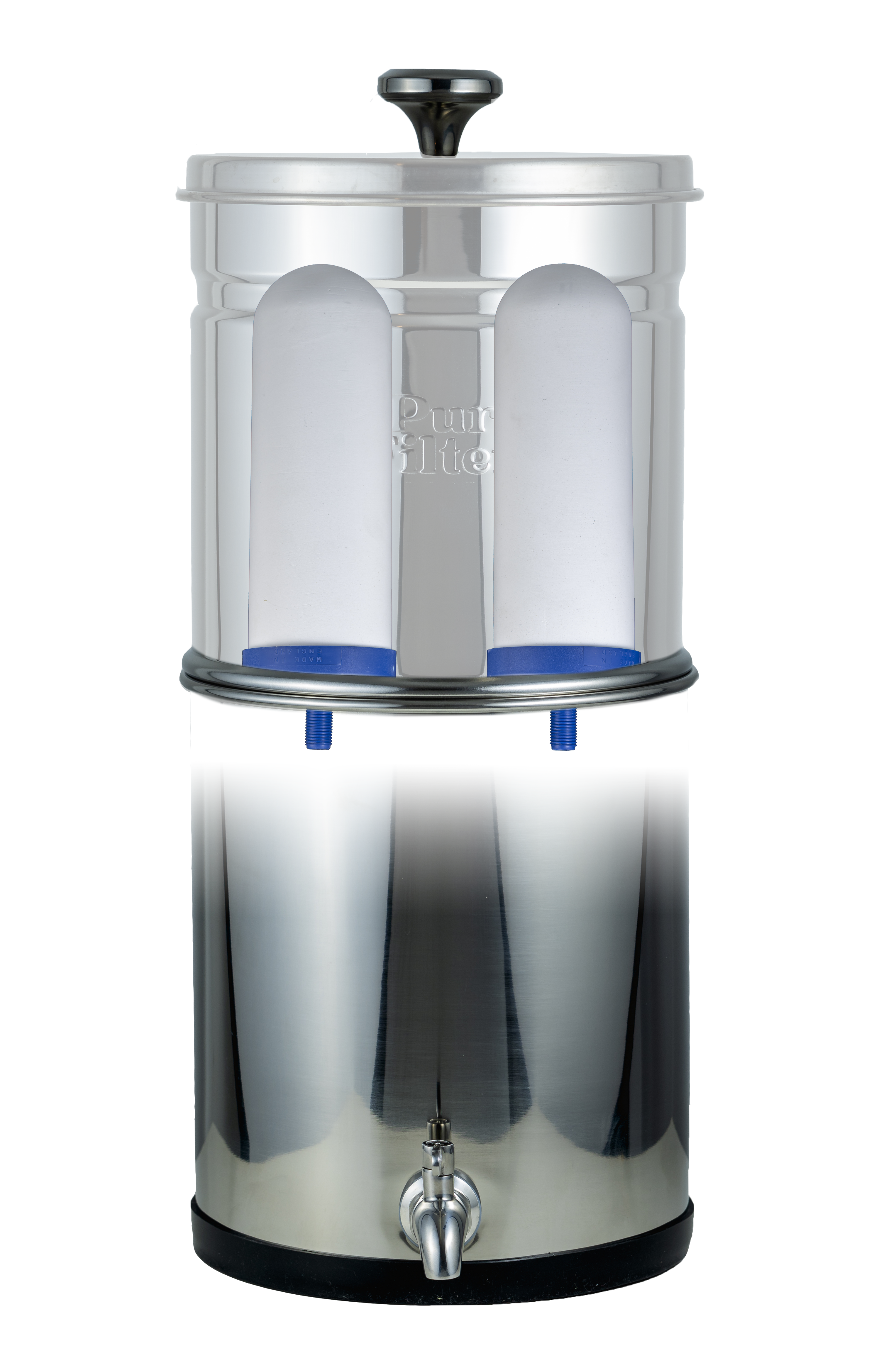
Why is it important to use a Pure Filters water purifier with Coldstream filters?
Using a Pure Filters water purifier equipped with Coldstream FTO+ filters is essential to ensure quality water, even in the presence of contaminants such as 1,4-dioxane, which can be found in tap water.
The Pure Filtersgravity filtration system, made of stainless steel, offers self-contained water purification, without the need for energy or complex installation, making it an ideal solution for home, travel, or emergency situations.
Coldstream FTO+ filters outperform traditional ceramic and activated carbon cartridges, effectively removing bacteria, viruses, nitrates, heavy metals, and other impurities, while preserving essential mineral salts.
With Pure Filters, you can turn any water source, whether it's from the tap, rain, or even a river, into pure, healthy, and delicious water.