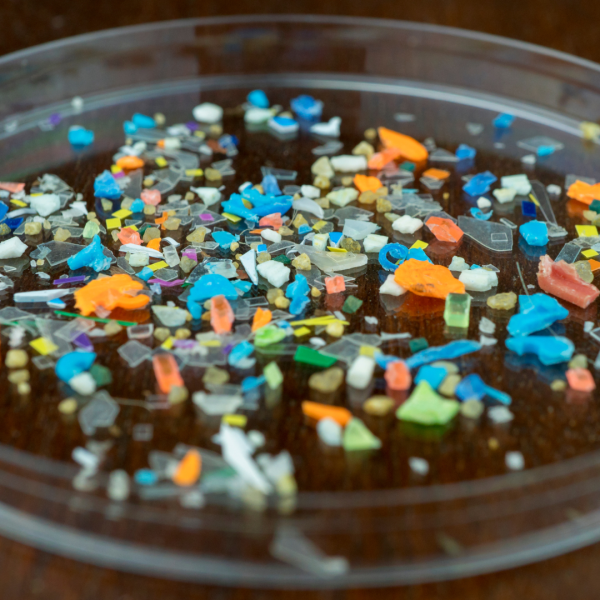
Microplastics
What are microplastics?
Microplastics are very small fragments of plastic, less than 5 millimeters in size. They can be created when a plastic object degrades, or when it is present from the outset, in products such as cosmetics, cleaning products, synthetic clothing, food packaging or industrial waste.
Microplastics can also come from the fragmentation of synthetic textile fibers when they are machine washed.
A major environmental problem, microplastics can end up in oceans, rivers, lakes and soils, where they are ingested by marine animals and terrestrial organisms, and even by humans, who also ingest them. They can also release toxic chemicals as they break down, which can have adverse effects on human health and the environment.
%20(44).png)
Where are microplastics found?
Microplastics are present in many places:
In water : Microplastics are often found in surface waters, such as oceans, rivers, lakes, canals and estuaries. They can be carried into the water by wastewater, industrial waste, waste in general, shipping activities, and extreme weather events such as storms.
In the soil : Microplastics can be present in the soil, especially if the land has been used for waste. They can also be transported into soils by runoff.
In the air : Microplastics can be carried by the air, especially by the wind. Plastic microfibers from synthetic clothing can be emitted into the air during washing and drying.
In consumer products : Microplastics are often added to consumer products such as cosmetics, cleaning products, paints, textiles, and food packaging.
Microplastics in our water and food: Why?
Microplastics end up in our water and food for several reasons:
Degradation of plastic waste : Plastic objects are often discarded or abandoned in the environment, where they slowly degrade into microplastics. These microplastics are found in soils, rivers, oceans and lakes, where they can be ingested by animals.
Human activities : Human activities such as washing synthetic clothing, using beauty and cleaning products containing plastic microbeads, producing and using disposable plastics, and industrial pollution, also contribute to the presence of microplastics in the environment.
The water cycle : Microplastics can be transported through the water cycle. Microplastics in rivers and oceans can be carried by ocean currents and precipitation, and then be present in rainwater, groundwater, and drinking water sources.
Interference in the food chain : Microplastics ingested by animals can end up in our food chain because animals are consumed by humans. Microplastics have been found in food products such as fish, seafood, vegetables, and fruits.
What are the risks of microplastics on our health?
The risks of microplastics to human health are not yet fully understood, but studies suggest that there are potential risks such as chemical toxicity, effects on the immune system, digestion and development. Endocrine disruptors found in microplastics can affect the development of fetuses and young children.
The risks to human health from microplastics depend on factors such as particle size and shape, chemicals associated with them, and the duration and route of exposure.
How to avoid microplastics?
Microplastics are small fragments of plastic, less than 5 millimeters in size, that end up in the environment, including the water and food we eat. They can be toxic to human health and the environment.
On a daily basis, the use of a Pure Filters water purifier (*) is ideal for counteracting the presence of microplastics in the water you consume. With the Coldstream FTO+ filters included in your water purifier, you'll enjoy clear, healthy, chemical-free water all day long.
Are you still hesitating about this economical and ecological option? Please note that laboratory tests on our Coldstream filters have been carried out to guarantee superior water quality.
You can view them here: Coldstream Laboratory Tests - Öko Laboratory Tests
Therefore, we advise you to avoid disposable plastic products: replace disposable plastic products such as plastic bottles with reusable alternatives such as glass bottles.
Explore our article on this topic: The dangers of bottled water.
Finally, choose sustainable products. It's better to buy higher-quality products that will last longer, rather than disposable or lower-quality products that will need to be replaced more often.