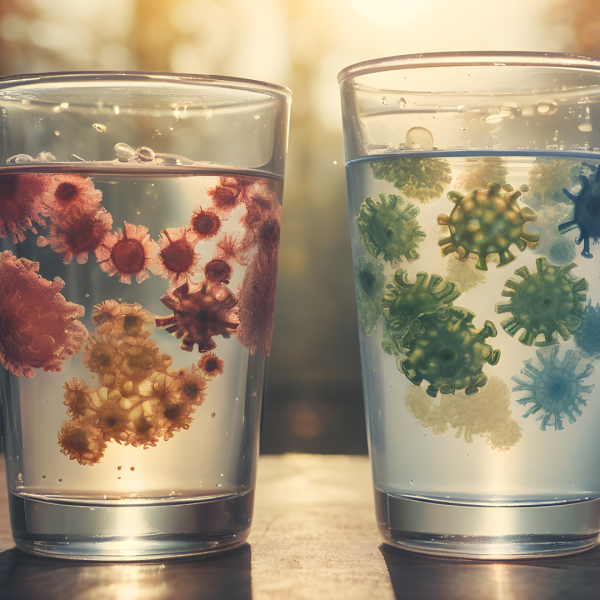
The impacts of pollutants in drinking water
What types of contaminants are commonly found in drinking water and how can they impact our health ?
Despite the widespread idea that drinking water is pure and safe, it can actually contain a variety of pollutants that raise concerns about their impact on human health.
Here is an overview of the pollutants frequently identified in drinking water:
Heavy metals : Metals such as lead, mercury, cadmium and arsenic can contaminate drinking water due to factors such as industrial pollution, sewage runoff and agricultural waste. These heavy metals can build up in the human body over time, leading to health problems such as neurological disorders, kidney problems, and cancers.
Chemicals : Industrial chemicals, pesticides, and herbicides can leach into drinking water sources via industrial spills, intensive agriculture, and environmental pollution. These substances can disrupt the hormonal system, cause developmental disorders in children and increase the risk of cardiovascular disease.
Bacteria and microorganisms : Water contaminated with bacteria such as E. coli coli, as well as viruses and parasites, can lead to acute gastrointestinal infections. These contaminations are often the result of inadequate wastewater management and inadequate treatment.
NitrateNitrates, mainly from agricultural fertilizers and organic waste, can contaminate drinking water sources. Excessive consumption of nitrates can cause methemoglobinemia, also known as "blue baby syndrome," limiting the blood's ability to carry oxygen.
Pharmaceutical residues : Medications and pharmaceutical residues can end up in drinking water as a result of improper disposal of expired or unused medications. Although concentrations are generally low, prolonged exposure to these substances raises concerns about their impact on health.
Chloride and fluoride : Although often added to water for treatment and dental health reasons, excessive levels of chloride and fluoride can be a problem. Excess chloride can alter the taste and quality of the water, while excessive exposure to fluoride can lead to dental and bone problems.
It is important to note that the composition and concentration of pollutants can vary by region, depending on water sources, local human activities, and water treatment processes in place.
What short- and long-term impacts can be observed following the consumption of this contaminated water ?
- Short-term impacts: When we ingest contaminated water, the harmful impacts often manifest themselves without delay. The short-term consequences may differ depending on the contaminant in the water, but they all share one thing in common: they have a direct impact on our immediate well-being.
Gastrointestinal manifestations : Water containing bacteria, viruses, or parasites can trigger acute gastrointestinal problems. Diarrhea, nausea, vomiting, abdominal pain, and fever are all common signs of infection. These symptoms, although temporary, can cause considerable discomfort and lead to severe dehydration if left untreated. Check out our article on dehydration and related tips here.
Chemical poisoning : Toxic chemicals in water can cause symptoms such as headaches, dizziness, nausea and gastrointestinal upset. Ingesting these compounds can quickly alter overall well-being, requiring medical attention.
- Long-term impacts: The effects of drinking contaminated water go far beyond the immediate symptoms. Over time, continued exposure to pollutants in water can lead to more serious, often irreversible, health problems.
Chronic conditions : Prolonged exposure to drinking water pollutants has been associated with an increased risk of developing chronic diseases such as cancer, cardiovascular disease, neurological disorders and kidney problems. Contaminants such as heavy metals and industrial chemicals can build up in the body, leading to progressive damage to vital organs. Explore our article detailing the health impacts of heavy metals here.
DNA damage : Some pollutants in water, such as industrial chemicals, can damage DNA. These alterations increase the risk of genetic mutations and the development of cancer in the long term.
Development Impacts : Children exposed to pollutants in drinking water can experience adverse effects on their development. Cognitive, neurological and physical problems can manifest themselves, potentially disrupting their growth and learning.
Endocrine problems : Chemicals in contaminated water can disrupt the endocrine system, causing hormonal imbalances and fertility problems. These impacts can affect several aspects of reproductive and hormonal health.
It is crucial to consider both the immediate and long-term consequences of drinking polluted water. Short-term effects may signal a water quality problem and require medical intervention, while long-term consequences underscore the critical importance of clean and safe water to maintain our health throughout our lives.
Trust water purifiers Pure Filters equipped with filters Coldstream FTO+ to remove all pollutants from your tap water. Water purifiers Pure Filters adapt to your daily purified water needs, providing a complete solution for clean and safe water at all times.
Choose the system and model that meets your needs, whether it's the Pure Filters Voyager 6L, The Home 9L or Family 12L.
What measures have been put in place to ensure the quality of drinking water ?
Preserving the quality of drinking water is a major concern for governments and health organizations worldwide. In order to guarantee the safety of the water we consume, various regulations and standards have been introduced.
Below is an overview of the regulations commonly applied to preserve the quality of drinking water:
- L'World Health Organization (WHO) sets international guidelines and standards for drinking water quality. These guidelines set limits for different contaminants, such as heavy metals, chemicals, and microorganisms, to ensure that drinking water does not pose a risk to human health.
- The European Union has put in place a Drinking Water Directive, setting quality standards for drinking water within its member states. The Directive sets maximum limits for various contaminants and requires Member States to regularly monitor the quality of their drinking water.
Many countries have their own national standards for drinking water quality. These standards vary depending on local water sources, specific risks, and available resources. They may also include regulations on water treatment methods and distribution systems.
- Government agencies responsible for health and the environment routinely conduct tests and analyses on samples taken from water sources and distribution systems. If the established limits are exceeded, corrective actions are implemented.
In many areas, the results of drinking water quality tests must be disclosed to the public, allowing consumers to know the quality of the water they consume. This practice promotes transparency and accountability in water supply authorities.
How can we preserve our well-being in the face of this problem ?
In response to the persistent problem of drinking water contamination, it is imperative to put in place actions to safeguard our health as well as that of our loved ones.
One of the most effective alternatives to ensure the consumption of clean and safe water is to adopt a water purifier Pure Filters.
Water purifiers Pure Filters are equipped with filters Coldstream FTO+, which efficiently dispose of a wide range of contaminants. Whether bacteria, viruses, chemicals or heavy metals, a purifier Pure Filters provides purified water without compromising its quality. Coldstream FTO+ filters, while eradicating harmful pollutants, preserve essential minerals in water, thus contributing to optimal hydration. Since they do not require electricity to operate, they can be used in a variety of settings, whether at home, while traveling, camping, or even in emergency situations.
Coldstream Filters use ceramic material to treat water safely. They offer both filtration by gravity and filtration by pressing for easy installation directly on the faucet. Discover our new product on Pure Filters Classic Tap.
The filtration process of Coldstream filters is based on three principles: particle trapping, the action of biocides that are harmless to humans, and the adsorption of chemical contaminants by activated carbon. The choice of high-quality ingredients allows Coldstream to Greatly reduce nitrates.
Investing in a water purifier can be an economical choice in the long run. Rather than relying on frequent purchases of bottled water, which can be expensive and generate plastic waste, a water purifier Pure Filters offers a sustainable solution to have a source of drinking water at your fingertips.
In this article, you will find the various convincing reasons to stop drinking bottled water.
Ultimately, the quality of the water we ingest has a direct impact on our health. By opting for the use of a water purifier Pure Filters equipped with Coldstream filters (*), we take a proactive approach to ensure that our drinking water is free of harmful pollutants. This solution provides peace of mind by ensuring that we are taking concrete steps to protect our health and the health of our loved ones, while simultaneously contributing to the preservation of the environment.