Understanding Ceramic and Activated Carbon Filtration
The importance of ceramics and activated carbon in water filters
The ceramic in a water filter is mainly used to remove fine particles, sediments, bacteria and parasites. By acting as a physical barrier, it traps solid contaminants and microorganisms before water passes through the activated carbon. This helps protect and extend the life of the activated carbon by preventing larger particles from reaching it, ensuring more efficient and long-lasting filtration possible.
Activated charcoal loses its effectiveness after about six months of use, its role being to remove or greatly reduce smaller contaminants such as chemicals and heavy metals, mainly due to the saturation of its pores.
When activated carbon filters water, contaminants such as heavy metals, chemicals, and organics adsorb onto the porous surface of the carbon. Over time, these pores fill up and the charcoal can no longer effectively adsorb new contaminants, reducing its filtration capacity.
What is adsorption?
Adsorption is a process by which molecules, ions, or atoms in a fluid (gas or liquid) adhere to the surface of a solid. This phenomenon is due to physical or chemical forces between the molecules of the fluid and those of the solid surface.
Here are some key points about adsorption:
Porous surface : Activated carbon, for example, has an extremely porous surface that provides a large surface area for adsorption. Pores and cracks in activated carbon provide sites where contaminants can attach.
Adsorption forces : Adsorption forces can be of two types: physisorption and chemisorption. Physisorption involves van der Waals forces, which are relatively small and reversible. Chemisorption, on the other hand, involves stronger and often irreversible chemical bonds.
Adsorption capacity : The ability of a material to adsorb contaminants depends on the size and structure of its pores, as well as the chemical nature of its surface. The larger the specific surface area of the material, the higher its adsorption capacity.
Saturation : Over time, the pores of activated charcoal fill up with adsorbed contaminants. Once the pores are saturated, the material can no longer adsorb new contaminants, reducing its effectiveness.
Applications : Adsorption is widely used in a variety of applications, including water filters, air purifiers, dehumidifiers, and industrial gas and liquid purification processes.
Example of adsorption in a water filter
When a water filter containing activated carbon is used, contaminants in the water, such as volatile organic compounds (VOCs), pesticides, herbicides, heavy metals, and chloroforms, are attracted and fixed on the surface of the activated carbon.
The pores of activated charcoal capture these contaminants, allowing clean water to pass through. However, once the pores are saturated, the filter needs to be replaced to maintain its effectiveness.
In summary, adsorption is a critical process for many filtration systems, capturing and retaining a wide variety of contaminants to purify fluids.
Our Pure Filters Systems
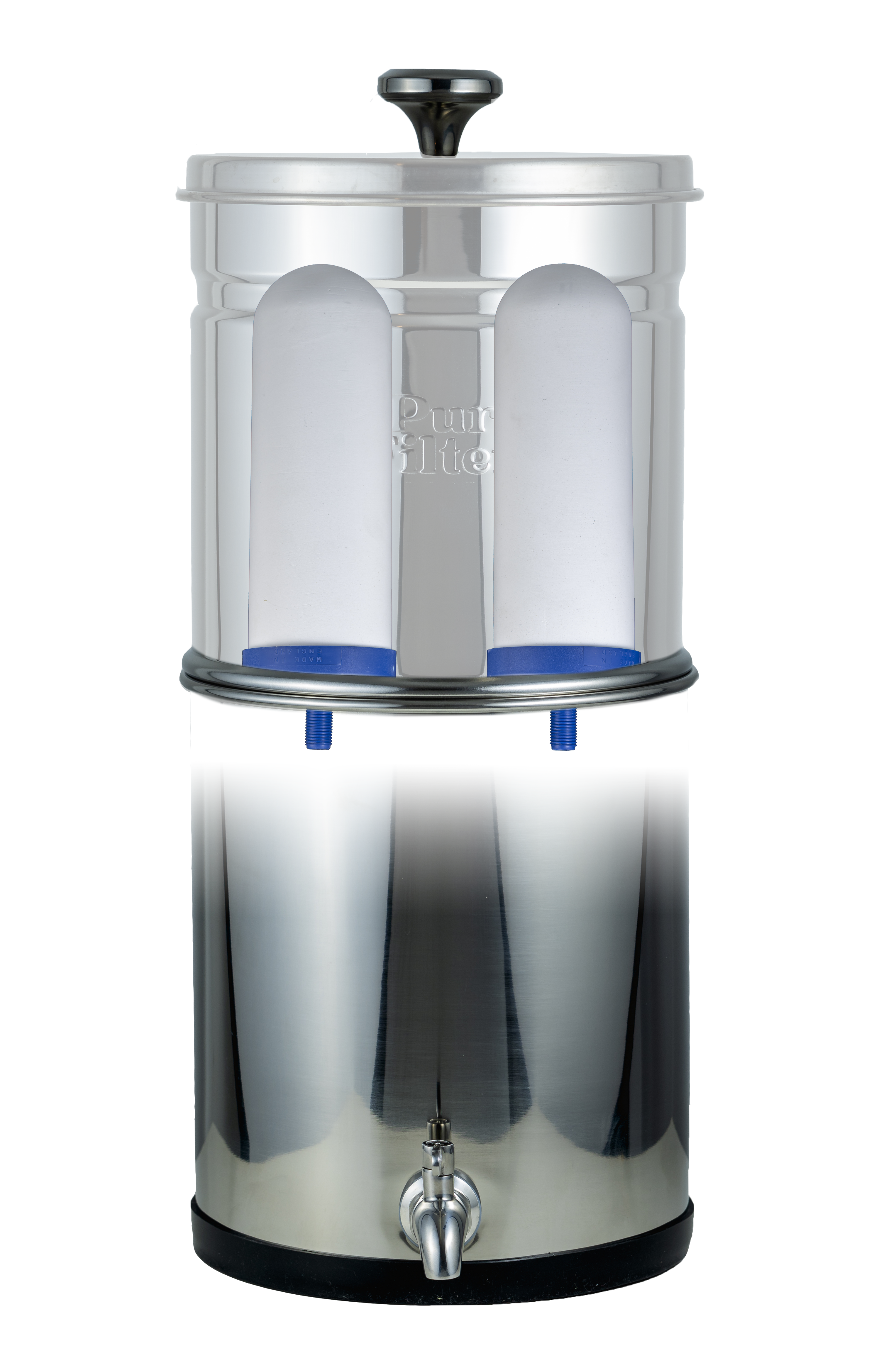
Our Pure Filterssystems are equipped with Coldstream FTO+ cartridges, which combine ceramic and activated carbon technology to provide a highly efficient water purification solution.
Coldstream FTO+ filters are designed to remove a wide range of contaminants, including heavy metals, chemicals, bacteria, and viruses, ensuring pure, healthy water for your daily consumption. On the other hand, they offer strong protection against nitrates and fluoride.
With Pure Filters equipped with Coldstream FTO+ cartridges, you get advanced filtration that not only protects your health, but also allows you to extend the life of the filters thanks to their innovative design.
%20(152-5%C2%A0%C3%97%C2%A085%C2%A0cm)%20(85%20x%20205%20cm)%20(Publication%20Instagram%20(45)).png)